Maine Coon Cats Size & Weight – How Big Are Maine Coon Cats Explained + Comparisons & Size Chart
Maine Coons are the largest domesticated cat breed in the world. Learn more about Maine Coon cats' size, weight, and differences from other cat breeds.
In this guide 10 sections
- Key Takeaways
- How Big do Maine Coon Cats Get?
- How Much do Maine Coon Cats Weigh?
- What’s the Size of Maine Coon Kittens?
- When Do Maine Coon Cats Reach Full Size?
- How to Tell if Your Maine Coon Cat is Overweight?
- Why Do Maine Coons Grow Larger Than Normal Cats?
- Maine Coon Cat Compared to a Regular Cat
- Is a Maine Coon Cat Bigger than a Norwegian Forest Cat?
- Sources
Distinctive and majestic, Maine Coon cats are one of the largest domesticated cat breeds. As their name might suggest they are natives of the state of Maine in North America. The harsh climate of their native land being the main reason they’ve grown to be very big and robust, with a dense fur coat and dog-like characteristics. Lucky for them their appearance has made them the most admirable gentle giants loved by humans.
These majestic cats get a lot of attention for their large frame and irresistible fluffiness. Commonly referred to as the dogs of the cat world, they hold this title for a reason. Their largest representative is Stewie, who held the Guinness World Record for the longest domestic cat, measuring 123cm (48.5 inches) from the tip of his nose to the tip of his tail. This purebred Maine Coon named Stewie definitely made the breed famous for his large frame. Yet, Maine Coon cats come in different sizes and are mainly considered moderate-to-large cats.
Not all Maine Coons grow into very large cats, but those that do can grow into quite a giant pet. The differences in size and weight depend on whether the cat is purebred or mixed, gender, genetics, and diet.
Key Takeaways
-
A Maine Coon’s body can stretch up to about 100cm (40 inches) long (VCA Animal Hospitals). Females are usually a little smaller than males.
-
Female Maine Coons, on average, weigh less than males. Males can weigh up to around 9kg (20lb), about 3.6kg (8lb) more than females.
-
There are several factors that affect the size and weight of a Maine Coon cat, like gender, genetics, diet, and lifestyle.
-
The average birth weight of Maine Coon kittens ranges from 60 to 158 grams. They develop slower than other breeds, reaching maturity between 3 and 4 years of age. Even if a kitten is a purebred, it’s impossible to predict how big will the Maine Coon get when it reaches maturity
-
Maine Coons are categorised as a moderate-to-large breed. Although some can grow very big, the average Maine Coon is not a giant cat. Still, a Maine Coon is significantly larger than the average household cat.
-
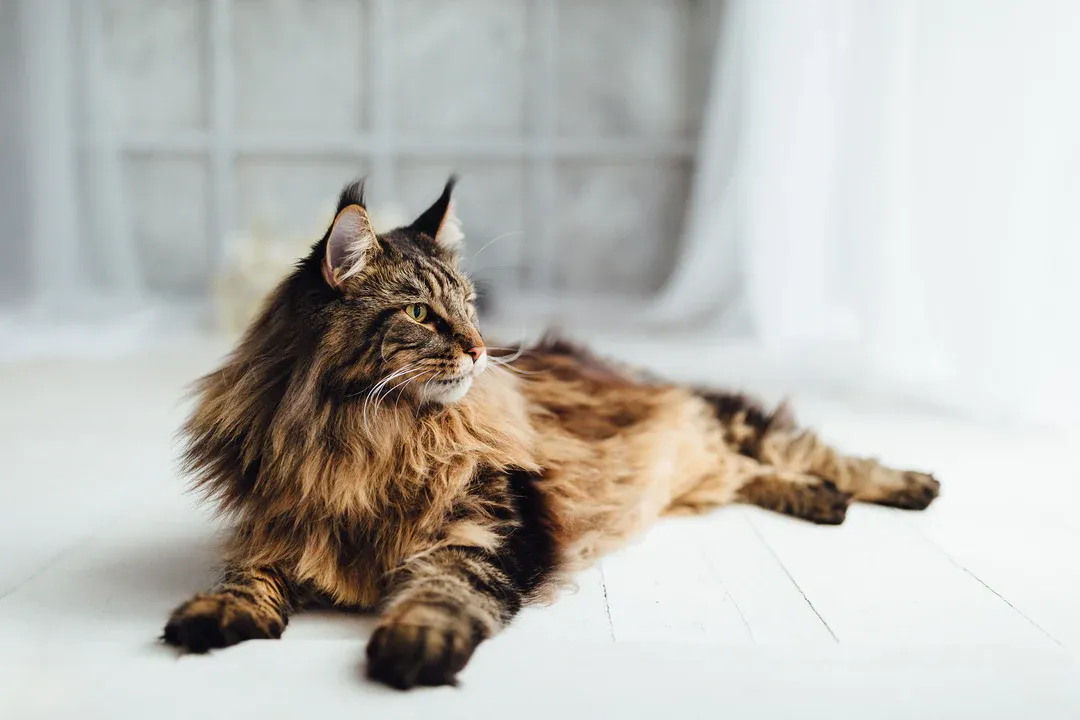
Adult Maine Coons have a broad build and rectangular, boxy frame. They have a thick, double-layered, lush coat that is shorter on the shoulders and longer on the chest and stomach. The harsh climate conditions and low temperatures they’ve evolved in have made them a large and husky breed. They have long and bushy tails and are also recognisable by the gorgeous tufts on their lynx-like ears.
-
Maine Coon cats are one of the largest domestic cat breeds. A big male can weigh around twice as much as an average cat (about 4kg), though most Maine Coons are less dramatically bigger. On the other hand, Norwegian Forest cats are closest in size to Maine Coons, but they are slightly smaller.
-
Maine Coon cats also appear big because of their fluffiness, and sometimes, the fluff can hide a big belly that indicates the cat is overweight. To make sure your Maine Coon is fluffy but not fat, you should be able to determine the waist area by feeling the cat’s body with your hands and making sure the waist is narrower compared to the upper body. If the Maine Coon is of a healthy weight, you can easily feel the rib cage too.
How Big do Maine Coon Cats Get?
If you’re struggling to picture just how large world recording holding Stewie the Maine Coon is, here are some reference points:
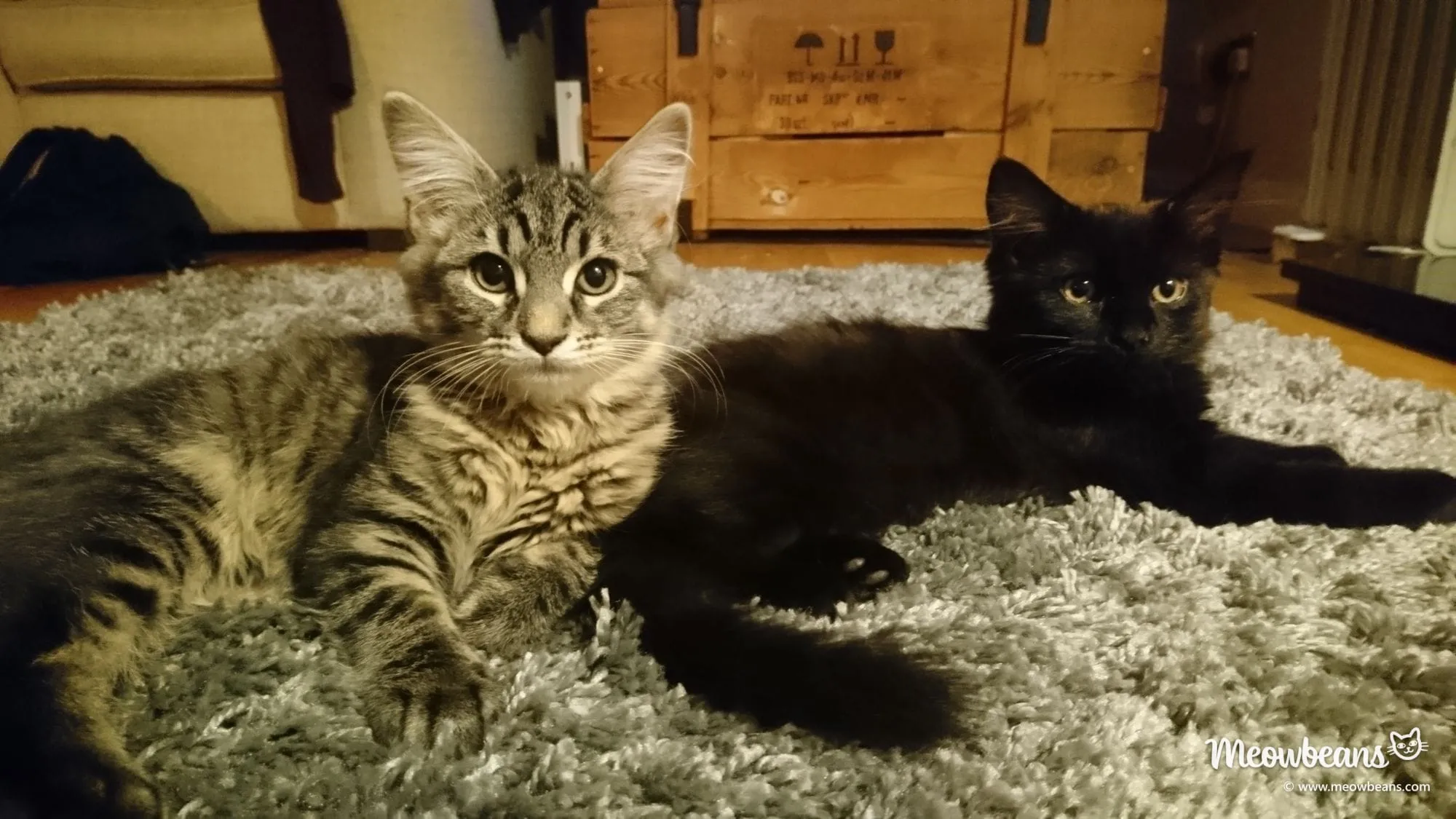
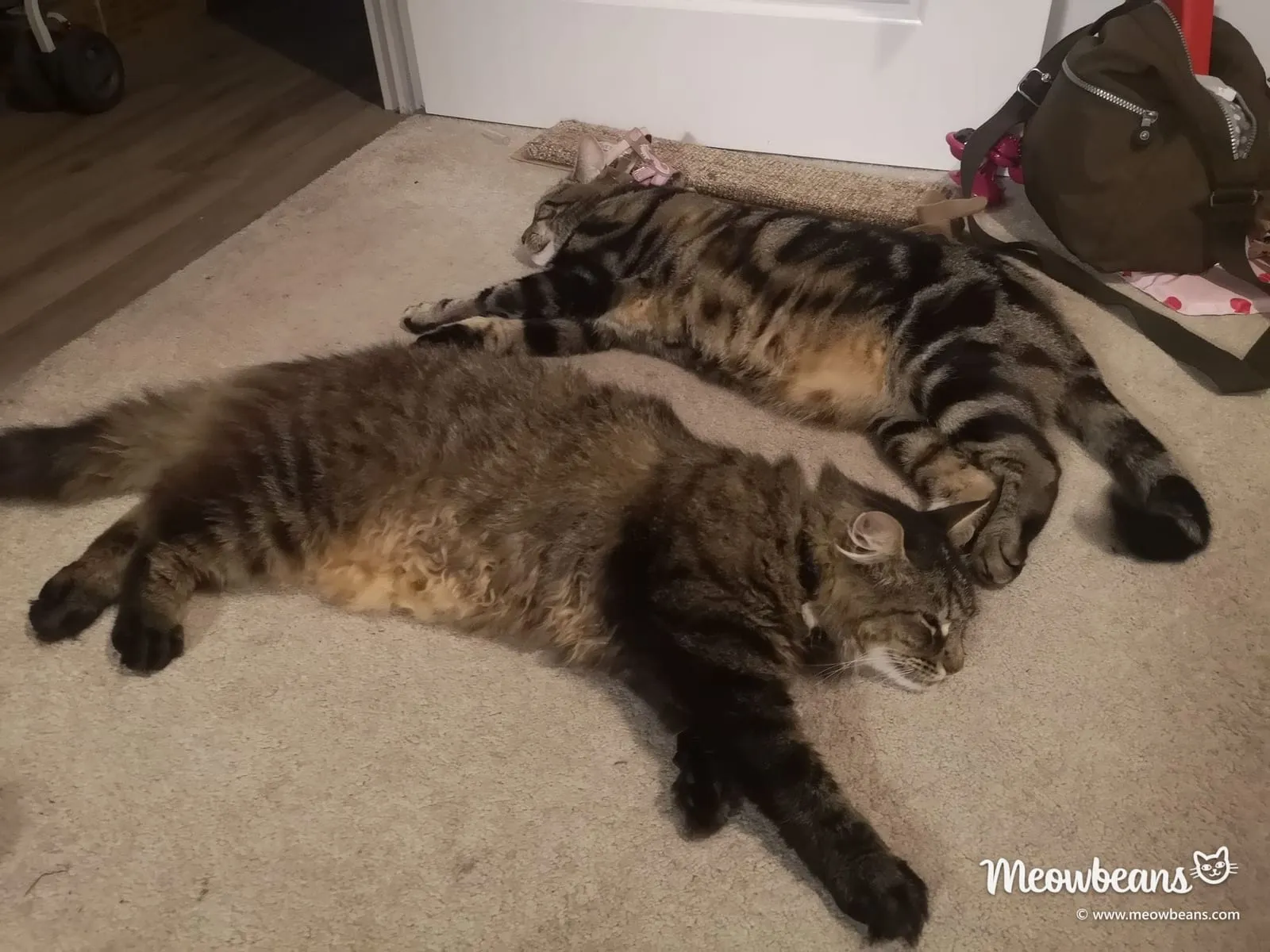 Marshall (6.5kg) and Max (about 6kg) stretched out on the carpet.
-
3/4 of the average human height
-
8-year old kid
-
Three times the average house cat
So yes, they can get really, really big. But let’s start with the average size chart for both male and female Maine Coons to understand how big do Maine Coon cats get.
Breed bodies such as the GCCF and CFA publish weights rather than standard heights or lengths, so the figures you’ll see quoted vary a lot. VCA says a Maine Coon’s body can stretch up to 40 inches (about 100cm) long (VCA Animal Hospitals), and the record holders were longer still, measured from nose to tail tip. Male Maine Coons are often larger than females.
Additionally, Maine Coon cats appear even bigger because of their fluffiness. Not only are they big in height and length, but their long, double-layered, and thick coats make them appear even bigger and add to their weight. Maine Coon cats have long and bushy tails. In some cats, it can be the same length as their body. Well, they are giant balls of fur that will get you to buy an extra large bed to cuddle in.
How Much do Maine Coon Cats Weigh?
VCA puts the breed at 3.6kg to 9kg (8 to 20lb), with males weighing up to around 9kg (20lb), about 3.6kg (8lb) more than females (VCA Animal Hospitals). Individual cats can be bigger or smaller than this.
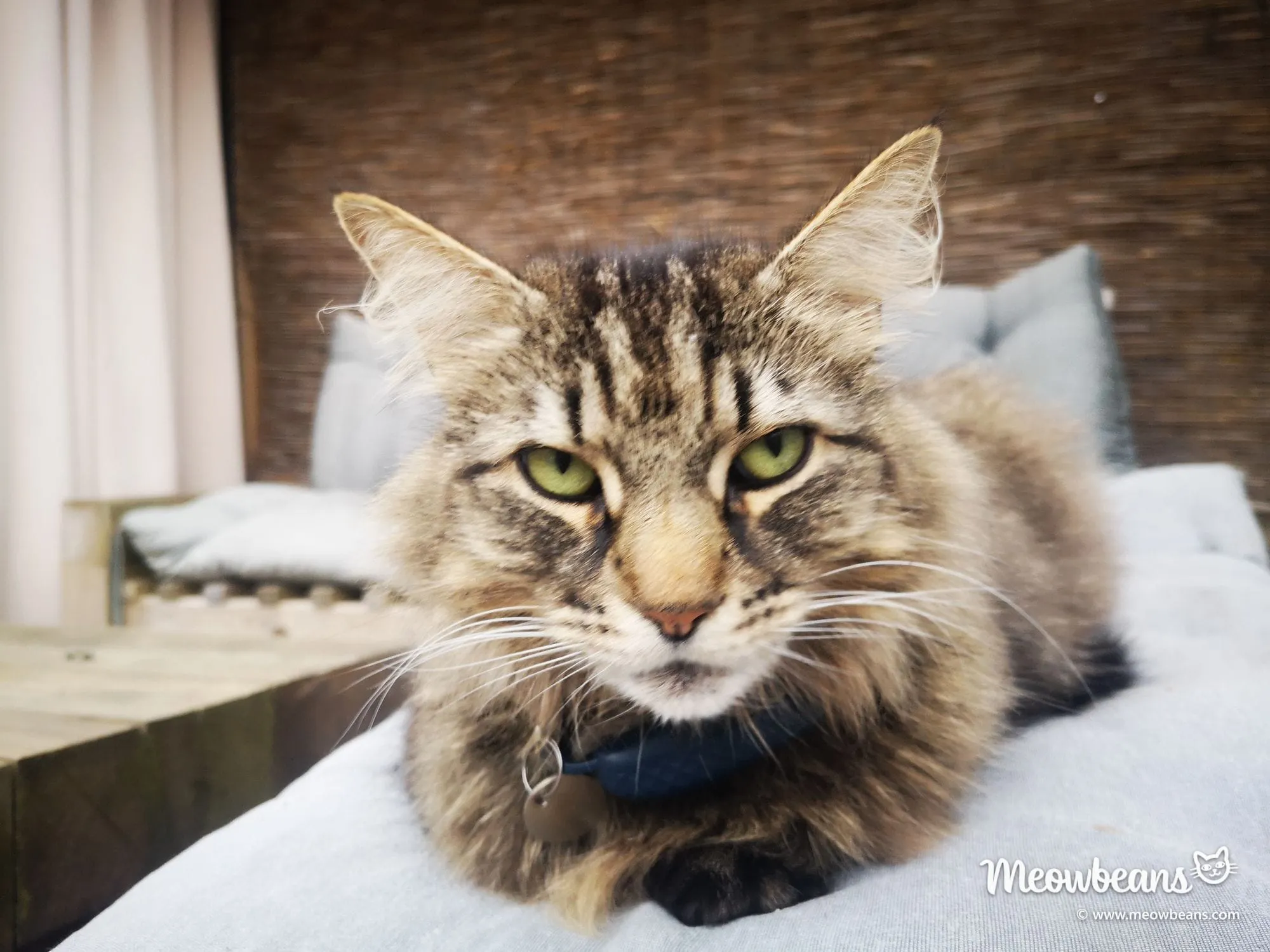
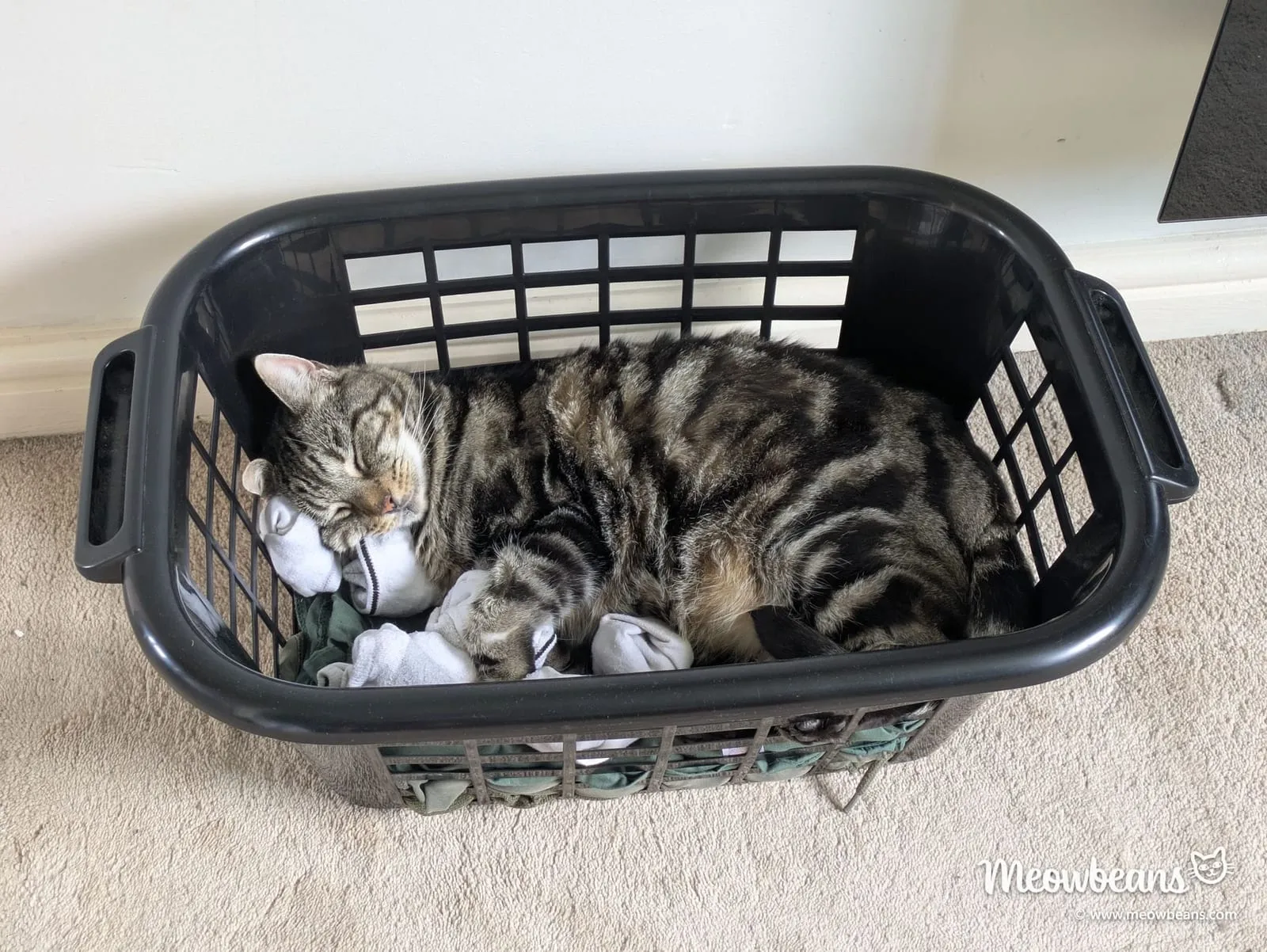 Marshall, our heaviest at 6.5kg, filling a laundry basket.
From our home
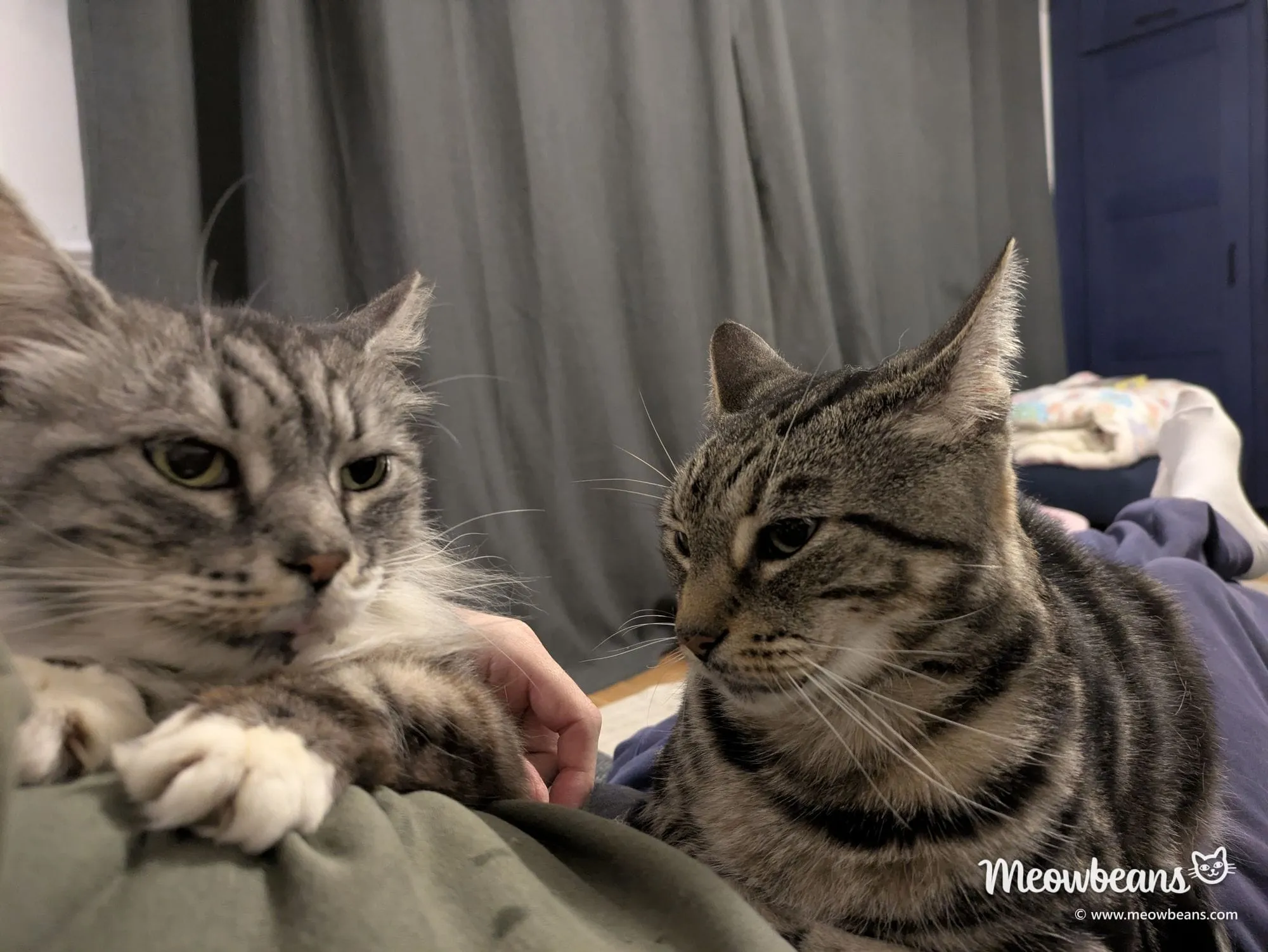
Long fur makes a big difference to how big a cat looks. Max’s long coat makes him look huge, but at about 6kg he’s actually a little lighter than his short-haired brother Marshall, who weighs 6.5kg.
— John
Of course, a Maine Coon cat can fall outside these ranges. The weight and size can differ from cat to cat depending on several factors. The fur also adds to the cat’s weight, so the cat’s total weight may change from season to season. Their coats get significantly thicker in winter when the temperatures are low, and they shed a lot during summer. Thus, the fur’s weight affects the cat’s total weight.
Factors that Affect Maine Coon Cats’ Size & Weight
As mentioned in the text, several factors affect the size of the fully grown Maine Coon cat, so let’s take a look at those.
-
Genetics – the weight and size of a Maine Coon cat are primarily predetermined by the genetic makeup. Not all purebred Maine Coon cats will get very big; it depends on genetics. Moreover, a Maine Coon cat can be a mixed breed, affecting its size and physical features. The mixed-breed Maine Coons are usually smaller than purebred.
-
Gender – male Maine Coon cats are often larger than female cats. Females are usually a little shorter and around 3.6kg (8lb) lighter than males (VCA Animal Hospitals).
-
Diet – same as for every live creature, the quality of the diet will affect the growth and size of the Maine Coon. A proper feeding schedule and a balanced diet help a Maine Coon kitten to grow to its full potential in size. On the other hand, if the cat is malnourished, it can affect the proper growth and size as a full-grown cat.
| Adult weight | Males | Females |
|---|---|---|
| CFA average (CFA) | 5.4–6.8kg (12–15lb), some 9kg (20lb) or more | 4.1–5.4kg (9–12lb) |
| VCA range (VCA) | up to around 9kg (20lb) | about 3.6kg (8lb) less than males |
Maine Coon adult weight by sex
These are general ranges, and individual cats can fall outside them depending on genetics, diet and exercise. Kittens grow at different rates, so your vet is the best judge of whether yours is on track.
What’s the Size of Maine Coon Kittens?
The average birth weight of a Maine Coon kitten is around 118 grams, ranging from 60 to 158 grams, with males generally born heavier than females. Those figures come from a study of 279 Maine Coon kittens, which also found that kittens from bigger litters tended to be lighter at birth (Socha et al., Polish Journal of Veterinary Sciences).
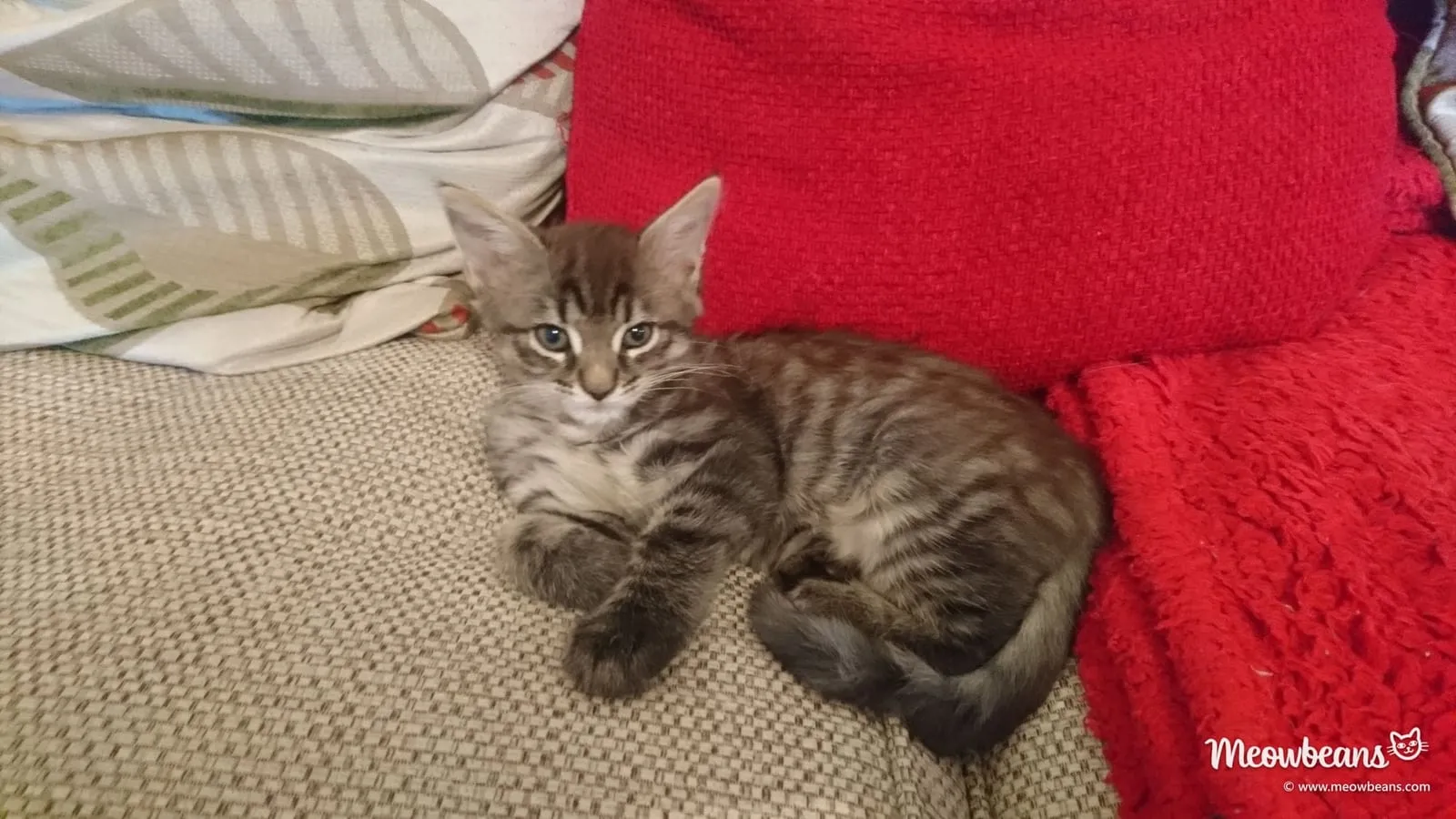 Max as a kitten in January 2018. He now weighs about 6kg.
Maine coon kittens grow and develop longer than other breeds. They reach maturity between 3 and 4 years of age. When buying a pedigree Maine Coon, the UK’s Governing Council of the Cat Fancy (GCCF) says kittens should be at least 13 weeks old before they leave the breeder.
Although they are born small-sized kittens, even when tiny, they are pretty distinctive with the lynx-like years with tufts coming out of them as well as the tufts of fur between their paw pads.
When Do Maine Coon Cats Reach Full Size?
Maine Coon cats grow and mature for a relatively longer time than other cat breeds. They usually reach maturity between 3 and 4 years old: the GCCF says up to four years, and the Cat Fanciers’ Association three to four. Their slower development results in strong muscles and solid bone structure. Adult Maine Coons have a broad build and rectangular, boxy frame. The thick, silky-smooth fur makes a Maine Coon look magnificent and husky to match its strong and resistant nature.
 September 2018: Max and Mila at about eight months, with Bean and Marshall.
Despite being large and strong, Maine Coon cats are kittens for longer. This makes them lively and very playful pets. Even when they reach full maturity, they still enjoy a human’s attention and love to cuddle and play.
Maine Coon Growth Spurts
Compared to other cat breeds, Maine Coons are slow to mature. And although every cat has a different development rate, you can expect Maine Coons to experience growth spurts at certain periods. They usually grow quickly and steadily in the first three months. Then, their first growth spurt will be noticeable between three and seven months of age. The feline is expected to gain around 1kg (2 lbs) a month during this period. After month seven, the first growth sprout is over, and the growth rate will seem to slow down.
Around year one, Maine Coons hit their second growth spurt, and it’s pretty noticeable how they are getting heftier and larger. After the second noticeable spurt, the development slows down, and the cat will grow and mature slowly and steadily at its own pace until reaching full size and maturity.
It’s important to be aware of growth spurts during a Maine Coons development to avoid overfeeding your cat out of concern for its slow development at certain periods. The best way to follow its progress is to measure it monthly and consult a veterinarian if there is anything concerning regarding the cat’s growth and development.
Maintaining a Maine Coon’s Health During Growth
Maine Coon cats are mainly very robust and not prone to health issues. Because of their wild origins and evolving in harsh conditions, they are a healthy and hardy breed. However, due to the small pool of genes, they are likely to suffer genetic diseases typical for their breed. The most common genetic disorder Maine Coons inherit is hip dysplasia.
Hip dysplasia is a physical disorder that makes it easier for the pet owner to catch the problem early on. It occurs when the ball-and-socket joint that connects the thigh bone (femur) to the hip (pelvis) is malformed. So instead of the “ball” fitting in the “socket”, gliding nicely and allowing the cat to move freely, it’s rubbing against the pelvis, loosening the joint and resulting in inflammation and pain. If untreated, it can compromise the cat’s ability to walk freely and cause pain. As a genetically inherited disorder, in some cases can start developing early on, so it’s important to watch for any symptoms during the Maine Coons growth spurts.
How to Tell if Your Maine Coon Cat is Overweight?
The Maine coons coat is long and double-layered. It is shorter on the shoulders and longer on the chest and stomach. Their lush coat gives them the magnificent appearance they are recognisable for, but it may also hide a fat belly underneath. Their fluffiness might make it harder to recognise whether a Maine Coon cat weighs more than what is considered normal.
If you think your Maine Coon has been lazy lately and has had a lot of its favourite treats, here are some tips on how to check and determine if they need to be put on a weight-loss diet:
-
The waist area of a Maine Coon is slightly narrower than its upper body. Looking at the cat from above and running your hands through the body (from front legs to hips), you can feel if the waist is narrower as it should be compared to the upper body. If you feel it is very wide and you can’t determine the waist area, it might mean your cat has put on more weight than normal.
-
If a Maine Coon cat is of a healthy weight, you can easily feel the rib cage with your hands. If you can’t really feel the ribs, chances are your cat has got a bit chunkier.
-
A Maine coons tummy is slightly higher than the bottom of the rib cage. If their stomach is sticking out, it might be time to cut down the calories.
-
Maine Coons are very playful, even as mature cats. They like to play fetch and follow you around the house. However, if they struggle with excessive weight, you may notice them being lazy, not interested in playing, and sleeping much more than before.
If you have any doubts about your Maine Coon cat’s size and weight, it is always best to contact and consult a veterinarian to understand if your cat needs to be put on a specific diet. Ensuring they are healthy and eating properly is crucial, as obesity in Maine Coons can lead to many health problems. Common obesity-related issues are diabetes, kidney issues, and cardiac diseases like ventricular hypertrophy. It is recommended that you weigh your cat regularly.
Why Do Maine Coons Grow Larger Than Normal Cats?
Maine Coon cats are categorised as a moderate-to-large breed, so the average Maine Coon is not extremely big. Given that they are famous for being on the larger side and most commonly thought of as giant cats, it’s important to note that these are exceptions. VCA puts the breed at 3.6kg to 9kg (8 to 20lb), which is still bigger than the average house cat at about 4kg.
Maine Coon cats are genetically predisposed to grow larger than average house cats. They’ve evolved in harsh climate conditions and low temperatures, which resulted in a strong muscular body and double-layered coat. Moreover, to reach the size and strength, they grow and mature much longer than regular cats, reaching full maturity from age 3 to 4.
Maine Coon cats are naturally big because of their native environment. However, most breeders selling Maine Coons do their best to produce kittens that grow into very big cats. By breeding a large male and a large female, there is a considerable chance their kittens will grow to be very large Maine Coon cats, maybe even larger than their parents. This selective breeding type leads to the birthing of larger-than-average Maine Coon cats.
This is less likely to happen with natural reproduction, however, genetics is never as predictable. Therefore, not all very big Maine Coon cats result from selective breeding. Some Maine Coons can mature into very big cats even if both parents are very small.
Can You Predict the size of your Maine Coon Cat?
Most people looking to buy Maine Coon expect to have a large cat when it matures. This is why many breeders are trying to satisfy these demands by mating purebred and large male and female Maine Coons. Though genetics play a huge role, recessive genes can cause the kittens or some of them to be smaller or larger than their parents.
So, the short answer is no. It is impossible to determine precisely how big can a Maine Coon get when it reaches maturity. Therefore, prospective owners should be aware that there is no guarantee the Maine Coon cat will grow to be the specific size they would expect it to be. In any case, the Maine Coon kittens will undoubtedly grow larger than the standard household cat.
To put this into perspective, let’s look at the other cat breeds compared to Maine Coons.
Maine Coon Cat Compared to a Regular Cat
Maine coons are considered to be the largest domesticated cats. They are significantly larger than the average household cat, take more time to mature, and have a shorter average life span.
From our home
Almost everyone who visits comments on how big our cats are, or says their own cat looks tiny by comparison when they get home. It’s hard to measure, but I’d put ours at a minimum of 10–20% bigger than the average cat. Mila is the exception: she’s much closer to the size of most cats.
— John
Regular house cats reach maturity at around two years old. The average cat weighs about 4kg (9lb) (Cats Protection). A big male Maine Coon can weigh twice as much as an average household cat, although many Maine Coons are closer in size. Regular cats have smaller ears, shorter fur coats, and small compact bodies. The average UK pet cat lives 11.7 years (Cats Protection), while VCA puts the Maine Coon’s lifespan at 12 to 15 years.
Maine coons are also considered way more friendly and sociable than regular cats. That is why they are often referred to as gentle giants and the dogs of the cat world. Although regular cats are also very affectionate pets, they become more passive and loners after reaching maturity. Whereas Maine Coons are playful and quite active as adults, constantly hunting and playing around with their owners.
Is a Maine Coon Cat Bigger than a Norwegian Forest Cat?
Norwegian Forest cats are considered the most similar to Maine Coons in size, weight, and appearance. The similarities sparked many legends that Maine Coons are their descendants, which is less likely to be true.
Norwegian Forest cats are closest in size to Maine Coons, however, on average, they are slightly smaller: the GCCF puts them at 9 to 16lb, against 10 to 20lb for the Maine Coon (GCCF). For more on how they compare, along with the Siberian and Ragdoll, see Maine Coon vs similar breeds. Other noticeable differences between these two breeds are;
-
the shape of the head, in coons being of a square shape while in Norwegian’s more triangular;
-
Norwegian cats have shorter bodies and higher rumps. Their front legs are slightly shorter than the hind pair, while Maine Coons have even-length legs.
-
Both breeds have thick and long fur. The Norwegian has a water-repellent outer coat that is short on the chest and shoulders. On the other hand, Maine Coons have silky-smooth and delicate fur that is longer on the chest like a lion’s mane and shorter on the shoulders.
In conclusion, Maine Coons are at the pedestal of domestic cats today as the largest and most desired breed. Their large physical presence makes them look majestic, while their friendly and loyal personality makes them the softest and most lovable breed. So if you are ready to welcome one into your life, you should make some space in your house but be sure to make an even bigger one in your heart.
Sources
Sources checked in October 2026.
- Guinness World Records: RIP Stewie: world’s longest cat passes away (2013)
- VCA Animal Hospitals: Maine Coon breed profile
- Governing Council of the Cat Fancy (GCCF): Maine Coon and Choosing a kitten
- GCCF: Norwegian Forest Cat breed profile
- Cat Fanciers’ Association: Maine Coon cat article
- Socha P et al. (Warsaw University of Life Sciences), a study of birth weights in 279 Maine Coon kittens (PDF). Polish Journal of Veterinary Sciences
- Cats Protection: Is my cat the correct weight? and How long do pet cats live?